Overview
In Jhunjhunu district, Alsisar belongs to Shekhawati’s landscape of havelis and fortified residences. Painted façades, gateways and balconies give a walk a concrete focus, connecting architectural heritage with the village’s present-day uses.
Rajasthan Tourism associates the settlement’s history with Thakur Samarth Singh, who established his capital here in 1783. Alsisar Mahal is a major landmark: its fortified outline, high enclosing walls and decorative features are documented in IGNCA’s heritage inventory. Havelis, temples and cenotaphs add to the village’s variety. Distinguishing these buildings’ functions is more useful than describing them all as palaces.
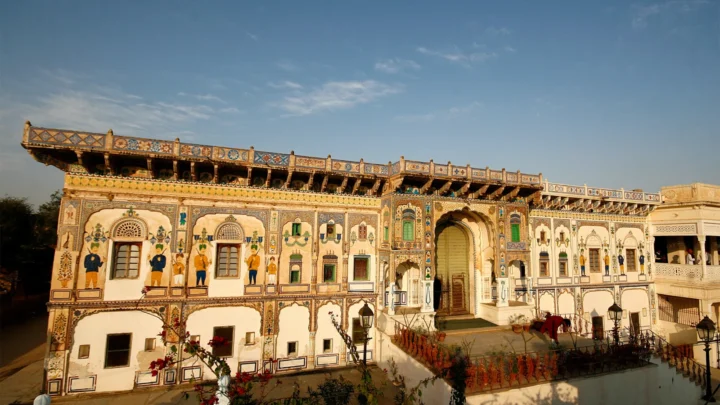
The photograph shows the façade of Indra Vilas haveli, a property distinct from Alsisar Mahal. It illustrates painted surfaces and openings without including a stay at that hotel or access to private areas. From public streets and places actually open to visitors, a guide can explain façade composition and the differences between domestic, religious and fortified architecture.
Allow time to examine details. Bring sun protection and adjust walking distances to the heat. Occupied homes and hotels retain their own rules: seek permission before entering a courtyard or photographing residents. A façade visible from the street does not make the interior publicly accessible.